
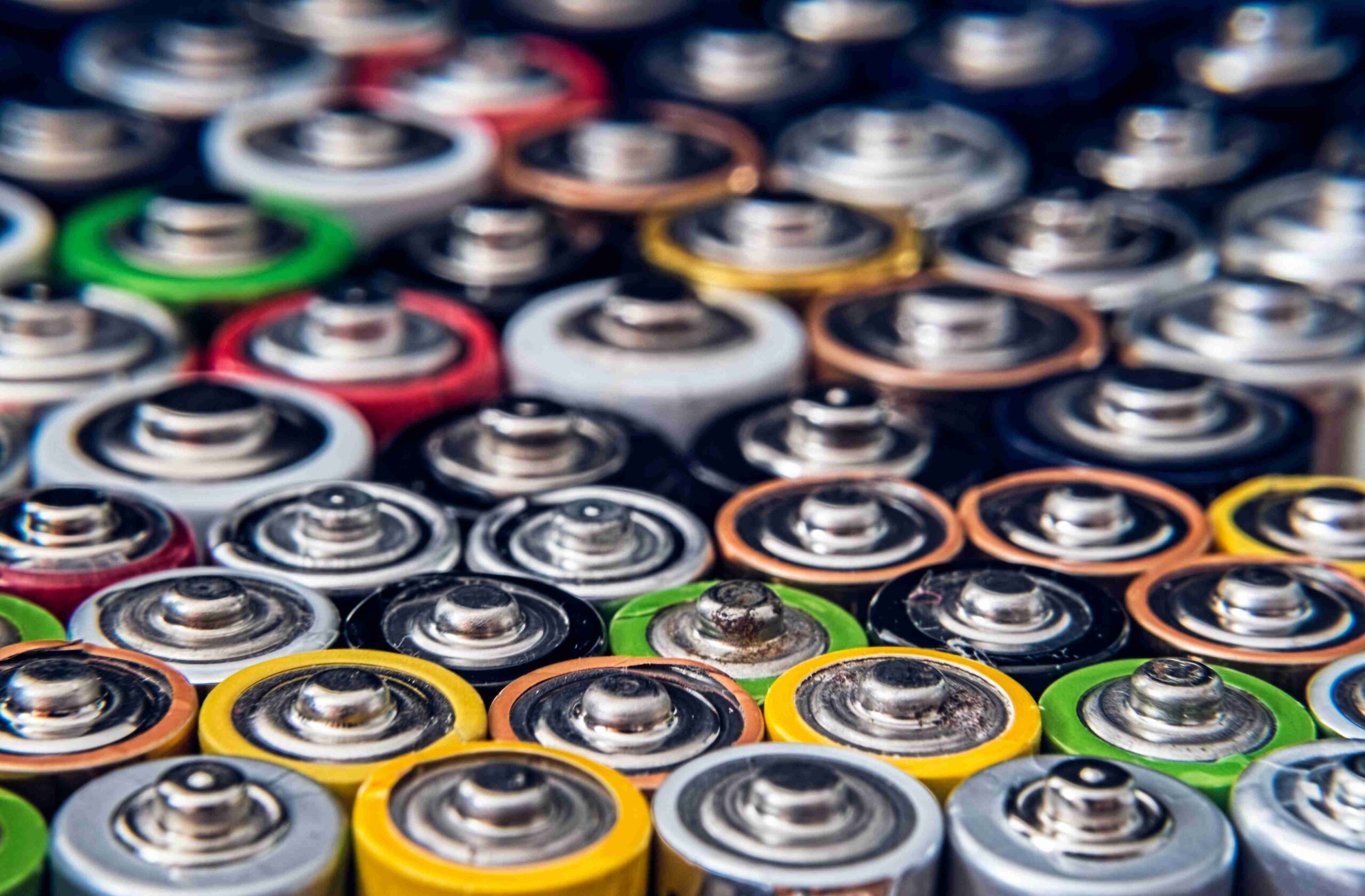
Batteries and Accumulators
RDC Environment has built a strong expertise across the entire battery value chain. Our team has carried out a wide range of studies; from comparing the environmental performance of emerging and established battery technologies to benchmarking Extended Producer Responsibility (EPR) schemes across Europe. This combination of technical analysis and policy evaluation has given us a solid understanding of both the engineering realities of batteries and the complex European and national regulatory landscape. We understand the sector from every angle and can translate that insight into practical, future-proof recommendations.
We support clients across the battery and accumulator sector at every geographic level, from France and Belgium to the wider European market. Our experience spans public authorities such as ADEME, OVAM, and Brussels Environment, as well as Producer Responsibility Organisations (PRO) like Batribox (formerly Screlec) and Bebat, and associations such as RECORD.
Our work covers the full range of relevant topics shaping the sector today: the electrification of vehicle fleets, improved collection of batteries from small appliances, second-life applications, and the environmental performance of recycling activities.
Some of our studies are presented shortly in more detail below:
- For ADEME, RDC Environment carried out a benchmark study on the management of batteries from the mobility sector in various European Union member states. The study aimed to help ADEME develop a solid methodology for calculating the tonnages of portable batteries and accumulators placed on the market by reviewing the benchmarks used in France and other European countries to determine average unit weights, and by providing a critical, cross-cutting analysis of these methods. It also sought to identify best practices for managing used electric-mobility batteries abroad through an assessment of approaches in five EU Member States and an analysis of which practices could be effectively transferred to the French context. Click here for the full report.
- For ADEME, RDC Environment studied the impact of the development of electrification of the car/LCV/2-wheel fleet on the collection and processing sector for end-of-life vehicles (ELVs). In collaboration with BDO-BIPE Advisory, RDC Environment evaluated how prepared professionals in the ELV recycling sector are for the shift toward electric vehicles, estimated the expected volumes of electric and hybrid ELVs over the next 5, 10, 15, and 20 years, and analysed in detail the technical, organisational, and economic implications of this transition. Click here for the full report.
- For a private industrial company, RDC Environment carried out an LCA to assess the environmental impact of 6 different battery technologies as well as investigated social impacts (risk for child labour) to support our client in their decision which battery technology to select for their foreseen on-site stationary battery.
- For a PRO, RDC Environment performed an assessment on the potential for collecting and recycling batteries from microelectronic devices, such as e-cigarettes. This involves evaluating the current and future market landscape, identifying waste collection and recycling opportunities, and examining the safety risks linked to waste management. Through benchmarking, the study identifies best practices in waste management from other countries concerning battery-powered microelectronic devices. Additionally, the legal framework surrounding this issue is briefly discussed.
- For RECORD, RDC Environment performed a state-of-the-art study on the second life of batteries from electric mobility in which the following topics were investigated; what is the quantitative second-life potential of electric mobility batteries? What are the barriers to overcome to facilitate reuse, and what are potential solutions? In addition, a technical and economic assessment of different initiatives related to second-life applications of such batteries were assessed. Click here for the full report.